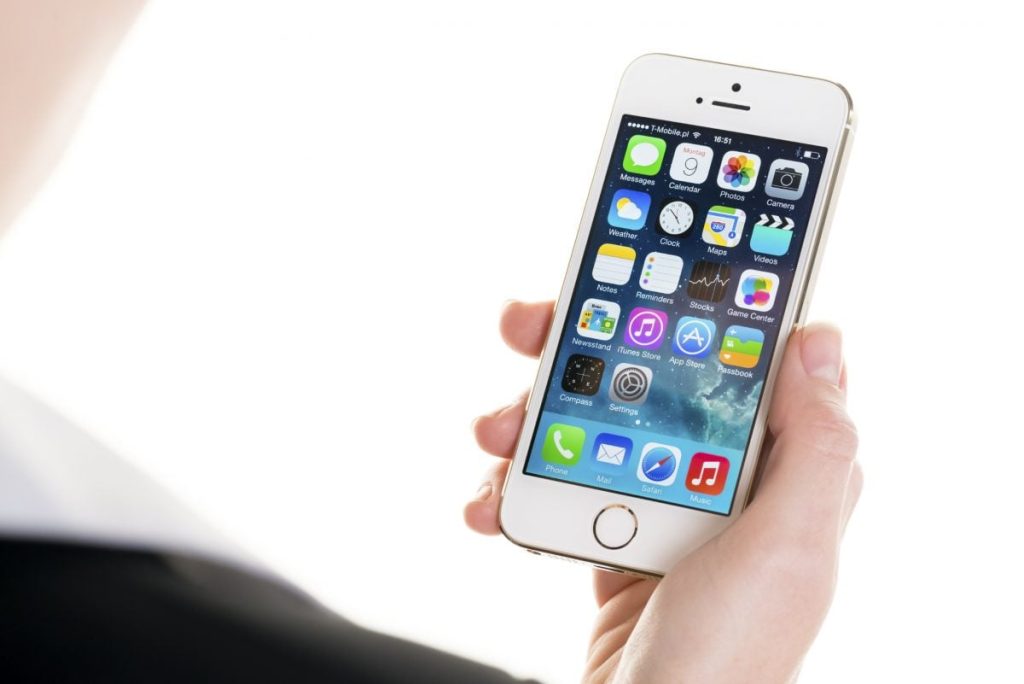

I lately spoke at TASA about one thing I believe private harm attorneys ought to be paying rather more consideration to.
The consumer’s cellphone.
Not as a result of we’re in search of some dramatic textual content message that wins the case. Normally, that’s not what we’re going to seek out.
What we might discover is one thing higher: a file of strange life.
The place somebody went. Who they talked to. What they have been doing. After they stopped doing it. Photos they took with out desirous about litigation. Work messages. Calendar entries. Notes. Receipts. Contacts. Generally years of little digital breadcrumbs that no person created as a result of they anticipated to wish them as proof sometime.
That’s exactly what could make them invaluable.
That is the third piece in a sequence I’ve been writing in regards to the issues that may form a private harm case lengthy earlier than anybody begins speaking significantly about settlement or trial.
The primary was about proof that disappears.
The second was about why circumstances shouldn’t be handled as “settlement circumstances” from day one.
This one is about proof that will already be sitting in your consumer’s hand.
Begin With The Digital camera Roll
Ask somebody what proof is on their cellphone and so they’ll most likely take into consideration textual content messages.
I normally take into consideration pictures.
Scroll by way of somebody’s digital camera roll from the 12 months earlier than a severe harm and you may study a shocking quantity about that particular person’s life.
There may be footage from holidays, kids’s sporting occasions, nights out with mates, residence initiatives, exercises, weekend journeys or simply strange Tuesday afternoons.
Then comes the harm.
Preserve scrolling.
Generally you may truly see life getting smaller.
The journeys cease. The golf footage disappear. There aren’t as many pictures from the youngsters’ video games. The one that was all the time doing one thing is all of a sudden spending much more time at residence.
Does that show an harm?
In fact not.
However it could assist inform a narrative that medical data alone can’t inform.
A medical chart can doc a shoulder harm.
It might’t essentially present you what that shoulder harm meant to the one who used to select up his daughter, work on his home each Saturday or play softball twice every week.
The cellphone would possibly.
What Had been You Doing At 4:17?
Telephones also can assist with one thing rather more fundamental: reconstructing a timeline.
Critical accidents are chaotic.
I’ve represented individuals who can keep in mind sure moments with unbelievable readability and have nearly no reminiscence of others. That’s not significantly shocking. They weren’t taking notes. They have been dwelling by way of an emergency.
Months later, attorneys begin asking very particular questions.
When did you allow?
Who did you name?
The place have you ever been?
When did you first inform anyone you have been harm?
Did you are taking an image?
Who else was there?
Now choose up the cellphone.
There could also be a name at 4:17 p.m. A textual content at 4:22. A photograph at 4:28. A map search. A rideshare receipt. A message to a partner. A name to a supervisor saying you received’t make it to work.
Individually, these items can look trivial.
Put them collectively and typically you will have a remarkably good timeline created by the particular person earlier than anybody advised them a timeline would matter.
That’s the type of proof I like.
The Witness You Forgot About
Right here’s one other widespread drawback.
“Who was there?”
The consumer offers you three names.
Six months later, you’re trying by way of one thing on the consumer’s cellphone and one other title seems.
“Oh, proper. She was there too.”
Individuals overlook folks.
Telephones don’t all the time overlook them.
A gaggle textual content, contact, picture, name historical past or previous message may also help determine somebody the consumer hadn’t thought of for the reason that day of the incident.
That particular person might prove to know nothing helpful.
Or she might have seen precisely what occurred.
You don’t know till you discover her.
That is one purpose I don’t suppose reviewing a consumer’s cellphone ought to imply trying to find one explicit piece of proof. Generally you’re making an attempt to grasp the ecosystem across the occasion.
Who was this particular person speaking to?
The place have been they?
What was occurring of their life?
What modified afterward?
The solutions might lead someplace helpful.
Work Lives On Telephones Now Too
This has turn out to be particularly vital as the road between our telephones and our workplaces has disappeared.
Individuals textual content their bosses.
They get schedules by way of apps.
They obtain work emails on their telephones.
They impart with clients. They {photograph} job websites. They maintain calendars. Gig employees might have an infinite quantity of their working historical past inside an app.
So when somebody tells me an harm affected their capability to work, I don’t suppose solely about tax returns and pay stubs.
These paperwork matter.
However there might also be a way more speedy file.
A textual content saying, “I can’t take the shift tomorrow.”
A calendar that all of a sudden empties.
Messages asking coworkers to cowl jobs.
Clients being rescheduled.
An impartial contractor turning down work.
Once more, none of these items essentially proves the whole damages declare.
Proof hardly ever works that neatly.
However it might probably corroborate what the consumer is telling you, and corroboration issues.
There’s One other Facet To This
I can’t discuss telephones and private harm circumstances with out mentioning the apparent drawback.
The protection will be concerned about them too.
Social media is the simplest instance.
If somebody claims she will be able to barely stroll after which posts a video of herself working a 10K, that’s going to be an issue.
However the challenge is broader than telling shoppers, “Don’t put up something.”
I don’t like giving shoppers cute tips for litigation. I need them to grasp one thing a lot less complicated.
Inform the reality.
Don’t exaggerate what you may’t do. Don’t reduce what you are able to do. Don’t attempt to manufacture a model of your life for a lawsuit.
And don’t begin deleting issues since you’re apprehensive about how they may look.
If there’s one thing on the cellphone that considerations you, inform your lawyer.
I’d a lot fairly study an uncomfortable {photograph} from my consumer than from opposing counsel at a deposition.
The cellphone isn’t robotically the plaintiff’s proof.
It’s proof.
Generally it helps. Generally it hurts. Normally, the lawyer wants to grasp what’s there earlier than deciding what issues.
Don’t Flip Your Consumer Into A Digital Crime Scene
There’s a steadiness right here.
A consumer’s cellphone might comprise years of intensely personal data that has completely nothing to do with the case.
The reply isn’t to hoover up somebody’s complete digital life as a result of some portion of it might theoretically be helpful.
You want a purpose for what you’re in search of.
If the query is the consumer’s bodily exercise earlier than and after an harm, search for proof related to that.
If it’s misplaced revenue, give attention to work.
If it’s the timeline surrounding a collision, reconstruct the timeline.
In case you’re making an attempt to determine witnesses, search for folks related to the occasion.
The purpose isn’t extra information.
It’s higher proof.
That’s an vital distinction.
The Proof We Create With out Realizing It
For many of human historical past, strange folks didn’t maintain detailed data of their strange days.
Now we do.
We simply don’t name them data.
We name them texts.
Pictures.
Calendars.
Apps.
Receipts.
Searches.
Messages.
Telephones have quietly turn out to be diaries that we by no means meant to put in writing.
For attorneys, that creates huge accountability. There are privateness points. Discovery points. Preservation points. Context issues enormously. One remoted textual content or {photograph} will be deceptive in case you don’t perceive what got here earlier than or after it.
Nevertheless it additionally creates a chance to grasp a consumer’s life in a method that wasn’t attainable a technology in the past.
Medical data can inform me what occurred to somebody’s physique.
Employment data can inform me what occurred to their paycheck.
A cellphone might assist me perceive what occurred to their life.
And in a private harm case, typically that’s the story we’re actually making an attempt to inform.
Amanda Demanda, Esq., is the founding father of Amanda Demanda Injury Lawyers and a nationally acknowledged trial lawyer with a give attention to severe and catastrophic industrial truck accident litigation. She at present serves as President of the Miami-Dade Trial Lawyers Association. She has constructed one of many most visible plaintiff firms in the country, with workplaces in Miami, Tampa, Houston, Dallas, and all through Florida and Texas, permitting her staff to deal with high-stakes circumstances throughout key transportation corridors. Identified for mixing courtroom ability with strategic perception, Amanda brings a people-first, safety-driven strategy to complicated trucking and private harm circumstances, with a give attention to accountability and real-world affect.
The put up Your Client’s Best Evidence Might Be Sitting In Their Phone appeared first on Above the Law.