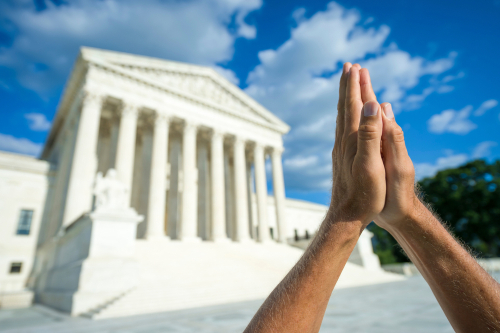
U.S. Supreme Courtroom
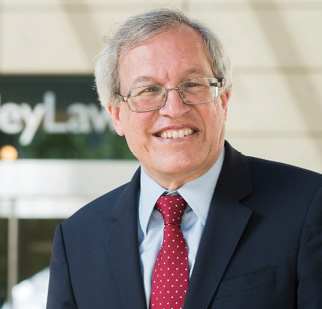
Erwin Chemerinsky. (Picture by Jim Block)
On Tuesday, the U.S. Supreme Courtroom will hear oral arguments in a significant case about free train of faith, St. Mary Catholic Parish v. Roy. Over the past decade, the justices have drastically expanded First Modification protections for faith. This case may both go a lot additional in that route or present a court docket that’s prepared to permit the federal government to cease discrimination even when it infringes on non secular beliefs.
Information
The case includes a Colorado legislation launched in 2023 that gives for common preschool training. Below this system, the state can pay for preschool at any public, secular non-public or non secular faculty. To obtain funds, the college should agree that it’s going to not discriminate in opposition to youngsters primarily based on their mother and father’ race, ethnicity, faith, sexual orientation, gender identification, incapacity, earnings or lack of housing.
St. Mary Catholic Parish in Littleton, Colorado, and one other Catholic preschool within the Archdiocese of Denver declined to signal the settlement, saying that it conflicts with church teachings on marriage, intercourse and gender. Their objection is to having to conform to take youngsters whose mother and father are homosexual, lesbian or transgender. They argue that excluding the non secular faculties from the common program denies them a public profit on account of their non secular beliefs.
The federal district court docket and the Denver-based tenth U.S. Circuit Courtroom of Appeals rejected their problem and upheld the Colorado legislation. Each courts relied on the Supreme Courtroom’s resolution in Employment Division v. Smith (1990), which held that the free train clause of the First Modification can’t be used to require exceptions from common legal guidelines. That case concerned Native People who sought an exemption from an Oregon legislation prohibiting the consumption of peyote on the grounds that its use was part of their non secular rituals. Justice Antonin Scalia wrote the opinion for the court docket ruling in opposition to the Native People. The court docket mentioned that as long as the legislation was impartial, not motivated by a want to infringe faith, and as long as it utilized to everybody, it couldn’t be challenged as denying free train of faith.
The federal district court docket and the tenth Circuit upheld the Colorado legislation prohibiting discrimination by preschools, concluding that it was a impartial legislation of common applicability. These courts additionally held that there was no discrimination in opposition to non secular faculties of their potential to obtain public funds. In a collection of instances—Trinity Lutheran v. Comer (2017), Espinoza v. Montana Department of Revenue (2020), and Carson v. Makin (2022)—the court docket held that it violates free train of faith for the federal government to disclaim funds to non secular faculties that it gives to personal secular faculties. The Colorado legislation was upheld as a result of it doesn’t discriminate in opposition to non secular faculties; it gives funds to faith-based preschools on the identical phrases as all different preschools.
The plaintiffs sought certiorari, and the Supreme Courtroom granted evaluate on two questions. (1) Whether or not proving an absence of common applicability underneath Employment Division v. Smith requires exhibiting unfettered discretion or categorical exemptions for similar secular conduct; (2) whether or not Carson v. Makin displaces the rule of Employment Division v. Smith solely when the federal government explicitly excludes non secular folks and establishments.
The appliance and way forward for Employment Division v. Smith
The final main Supreme Courtroom resolution regarding the utility of Employment Division v. Smith was Fulton v. City of Philadelphia (2021). Town of Philadelphia contracts with non-public social service companies to assist place youngsters in foster houses. Each contract is specific in prohibiting the company from discriminating on the premise of race, intercourse, faith and sexual orientation.
Catholic Social Companies lengthy had participated on this facet of this system however lately has declined to take action due to the contractual requirement that it not discriminate primarily based on sexual orientation. CSS says that its non secular beliefs forestall it from offering inspections or putting youngsters with identical sex-couples.
The company challenged the nondiscrimination requirement as violating its First Modification rights. The district court docket and the Philadelphia-based third U.S. Circuit Courtroom of Appeals rejected these arguments. Each courts relied on Employment Division v. Smith.
The Supreme Courtroom unanimously reversed the decrease courts and dominated in favor of Catholic Social Companies. Chief Justice John Roberts wrote the opinion for the court docket. He mentioned that underneath Employment Division v. Smith a “legislation isn’t typically relevant if it ‘invite[s]’ the federal government to think about the actual causes for an individual’s conduct by offering a ‘mechanism for individualized exemptions.’” The Philadelphia ordinance gave metropolis officers the authority to grant exceptions to the nondiscrimination requirement. The court docket mentioned that it was irrelevant that none ever had been granted and that there was no proof of discrimination in opposition to non secular entities. The existence of discretion was sufficient for it to not be a impartial legislation of common applicability. Subsequently, it needed to meet strict scrutiny. The court docket concluded that the town failed to satisfy strict scrutiny and that its coverage was subsequently unconstitutional.
Justice Samuel Alito concurred within the judgment and was joined by Justices Clarence Thomas and Neil Gorsuch. In a 77-page opinion, Justice Alito expressly referred to as for the court docket to overrule Smith. Justice Alito argued at size in opposition to the Smith method and acknowledged: “We must always rethink Smith with out additional delay. The right interpretation of the free train clause is a query of nice significance, and Smith’s interpretation is difficult to defend. It might’t be squared with the bizarre that means of the textual content of the free train clause or with the prevalent understanding of the scope of the free-exercise proper on the time of the First Modification’s adoption.”
Justice Amy Coney Barrett wrote a concurring opinion that was joined in full by Justice Brett Kavanaugh. She expressed settlement with lots of the criticisms of Smith superior by Justice Alito. However she mentioned that there are laborious questions as to what check ought to change the one from Smith. She mentioned that the court docket didn’t want to handle that on this case as a result of the town of Philadelphia coverage was unconstitutional “regardless whether or not Smith stays or goes.”
The Supreme Courtroom didn’t grant certiorari in St. Mary Catholic Parish v. Roy on the query of whether or not to overrule Employment Division v. Smith, however that situation very a lot underlies the problems earlier than the court docket.
Petitioner St. Mary’s Catholic Parish clearly is urging the court docket to jettison Smith. The primary argument in its temporary is that the “court docket hardly ever applies Smith.” It says: “Out of the 18 free train instances this court docket has resolved since Smith in 1990, this court docket has relied on Smith solely twice to rule in opposition to the non secular objector,” and one in every of these was Smith itself.
There is also the underlying query of whether or not a non secular perception ought to be a foundation for an exemption from antidiscrimination legal guidelines. In Newman v. Piggie Park Enterprises Inc. (1968), the court docket summarily rejected a declare that an individual’s non secular beliefs had been a foundation for his or her discriminating in violation of civil rights statutes. If the court docket overrules Smith, or says that strict scrutiny ought to be used underneath Smith, the query will must be addressed: Ought to free train of faith present a proper to hurt others by discriminating in opposition to them?
The denial of funding
For many years, the Supreme Courtroom determined instances about when authorities assist to non secular faculties violated the institution clause of the First Modification. However during the last decade, the court docket has held that the denial of funding to non secular faculties when it’s supplied to personal secular faculties violates the free train clause of the First Modification. For instance, in its most up-to-date ruling, Carson v. Makin (2022), the court docket held that it violated free train of faith for the state to pay for secular non-public faculties however not non secular faculties for kids in rural areas the place there aren’t public faculties.
The district court docket and the tenth Circuit upheld the Colorado legislation on the bottom that it supplied assist to all preschools—public, secular non-public, and faith-based—on precisely the identical phrases. However St. Mary’s Catholic Parish argues that Colorado is denying it funding due to its exercising its non secular beliefs and excluding youngsters whose mother and father are homosexual, lesbian or transgender.
Within the prior instances about funding, the state legal guidelines expressly excluded non secular faculties. The Colorado legislation doesn’t do this. Is it sufficient for a free train violation that its impact is to disclaim funding to varsities which have a non secular foundation for his or her discrimination primarily based on sexual orientation or gender identification?
Conclusion
In recent times, the conservative majority on the Supreme Courtroom has drastically lessened the protections of the institution clause of the First Modification whereas concurrently considerably growing the safeguards underneath the free train clause. It has proven assist for individuals who wish to violate anti-discrimination legal guidelines on account of their non secular beliefs. St. Mary Catholic Parish v. Roy will probably be necessary in indicating whether or not the court docket will go even additional in these instructions.
Erwin Chemerinsky is dean of the College of California at Berkeley Faculty of Legislation. He’s an skilled in constitutional legislation. He’s additionally the creator of many books, together with his most up-to-date ones: Campus Speech and Tutorial Freedom: A Information for Tough Occasions and The Supreme Courtroom October Time period 2024: Taking Sides.